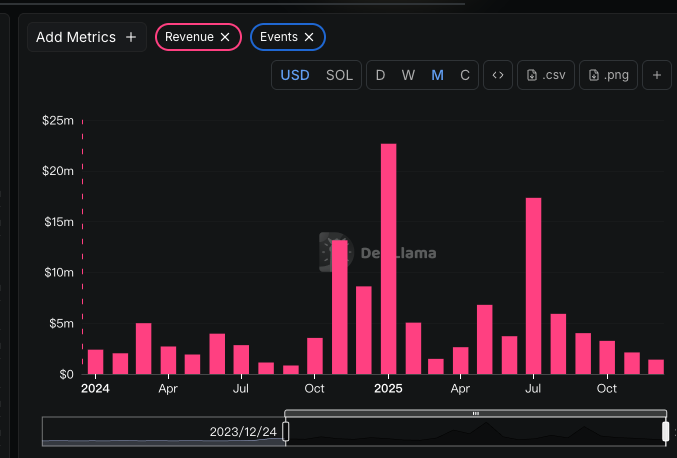
This analysis aims to answer the question: Do token buyback explain token price performance (excess return vs BTC) in a consistent, repeatable way?
TL;DR: Buybacks help, but they don’t “save” tokens
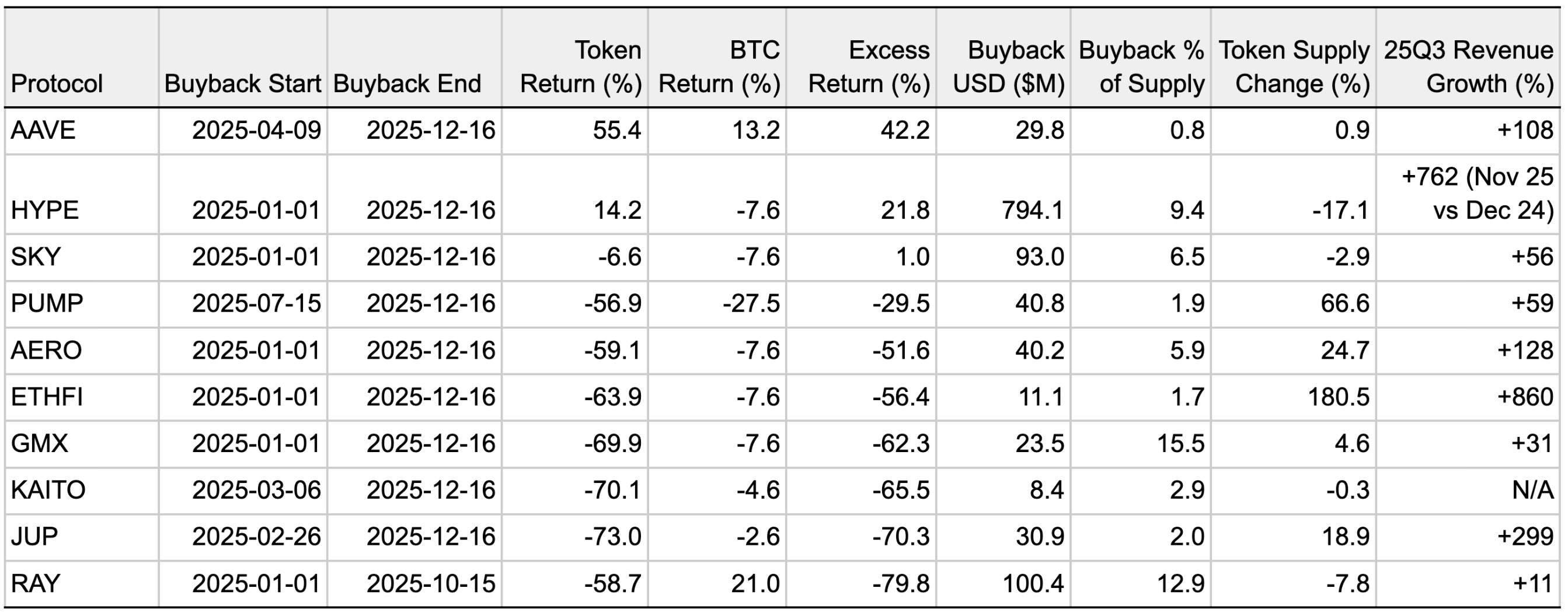
Only 3/10 tokens beat BTC during their buyback windows (AAVE / HYPE / SKY). Big buyback headlines still often underperform.
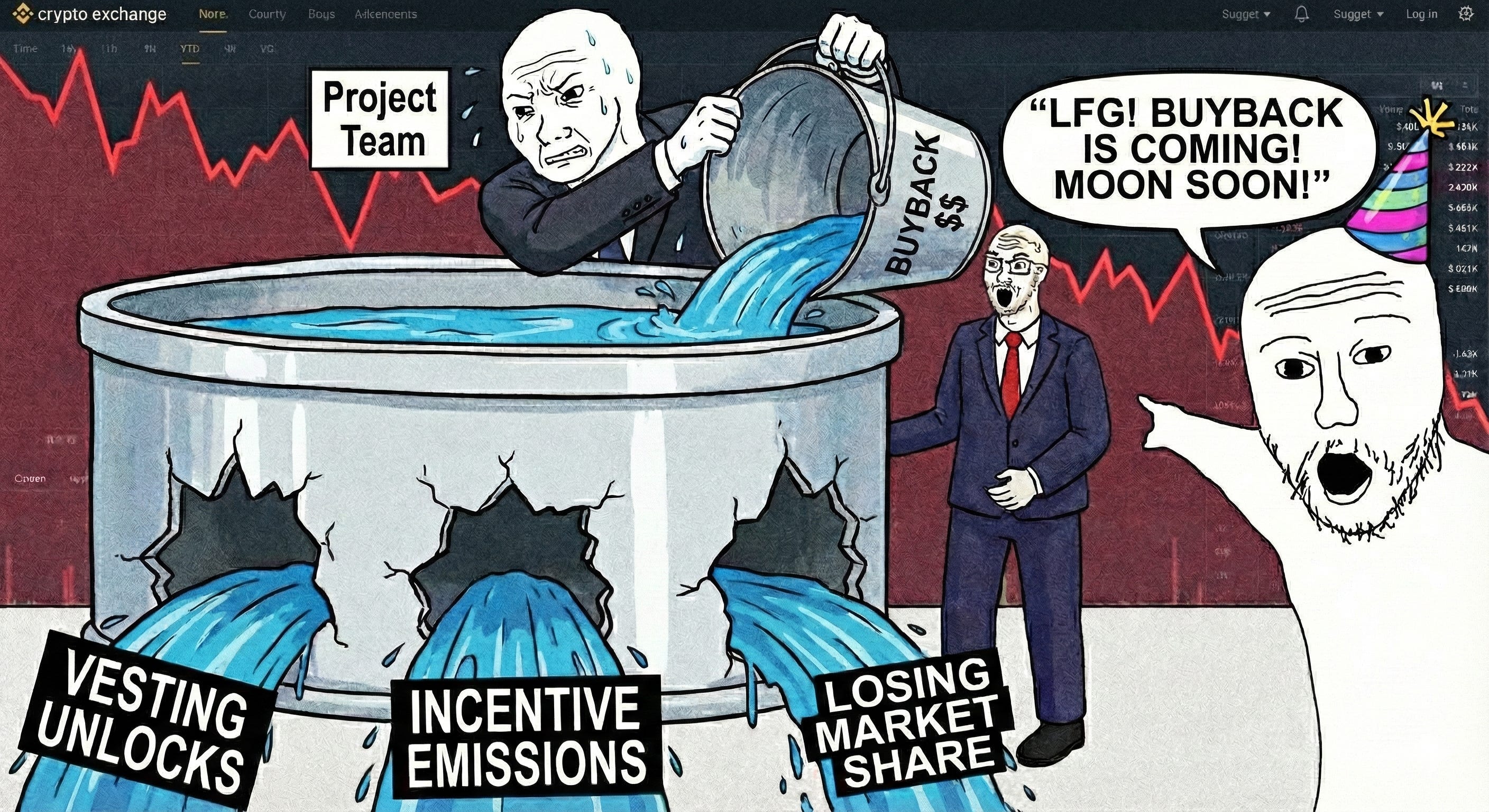
Net supply matters more than buyback spend: buybacks must actually reduce/flatten circulating supply; otherwise issuance, vesting, and emissions overwhelm the effect.
The repeatable pattern: buybacks + flat/declining supply + improving fundamentals/competitive outlook → positive excess return. Miss any one, and excess return is hard—even with large buyback

Methodology & Data Source
This analysis focuses on 2025 (YTD) buyback amount, and uses excess return vs BTC as the price-performance metric, to assess whether there is any stable correlation/explanatory framework between buybacks and excess return. Also the analysis incorporated the broader context of net supply dynamics and fundamentals/competitive landscape, to avoid over-attributing price moves to buybacks alone.
Data sources
Price / market cap: CoinGecko API (token price, market cap, BTC price)
Buyback events: compiled from public research and project announcements (buyback start/end, USD spent, mechanism, etc)
Sample selection (why these 10 tokens)
The tokens are the top 10 by 2025 YTD token buyback amount (USD), and each has a continuous, ongoing buyback program in 2025.
We intentionally exclude “one-off” buyback announcements (e.g., a single official statement to repurchase X tokens / $Y). One-off announcements tend to create a stronger event-driven/announcement effect and are harder to use to evaluate the longer-horizon impact of sustained buybacks on price.
Using continuous buyback programs helps keep the focus on whether buybacks truly change net supply dynamics, and whether the market prices supply improvement together with fundamentals and competition over a longer window.
Result and Key Finding
Key definitions
Token return (%): total token price return over the buyback window
BTC return (%): total BTC price return over the same window
Excess return (%) = Token return (%) - BTC return (%)
Buyback % of supply: buyback size as a % of circulating supply
Circulating supply (estimated) = Market cap / Token price
(Note: CoinGecko Demo API does not provide historical supply; supply here is a derived value)Token supply change (%): % change in circulating supply over the same window
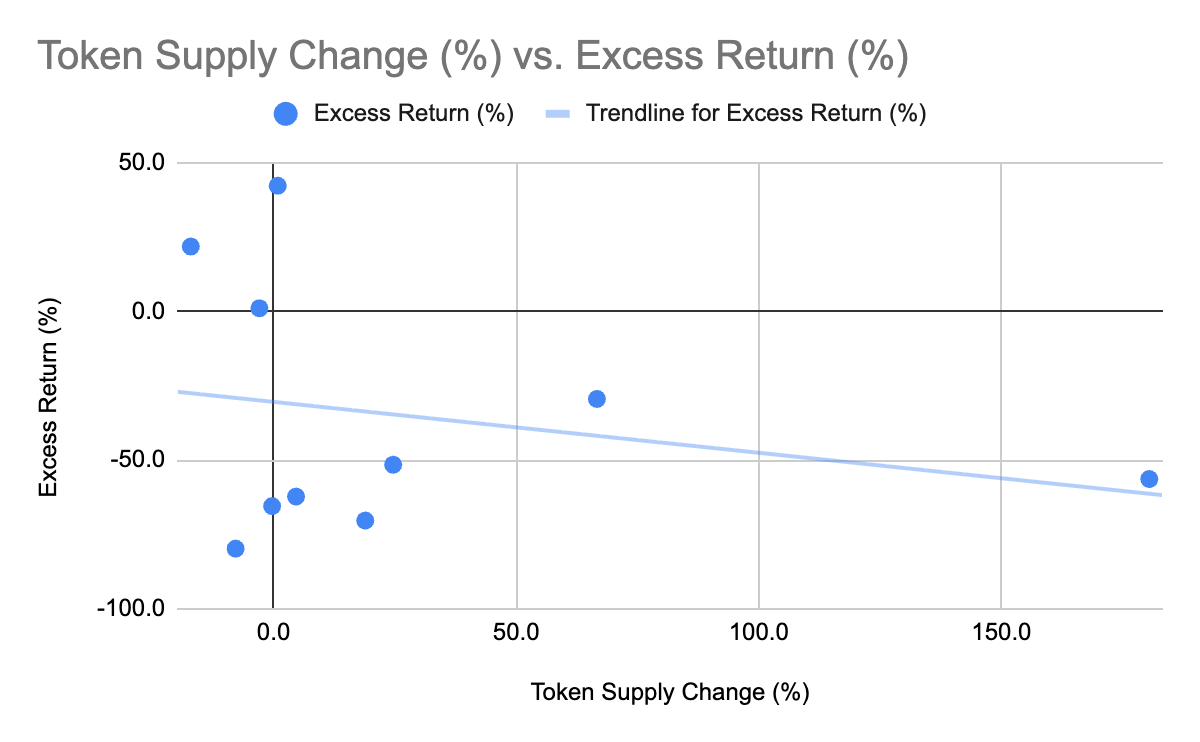
1) Token returns are driven by many factors; buybacks can matter, but alone they have limited explanatory power
Even with high buyback % of supply, outcomes differ materially (e.g., strong outperformance like HYPE vs significant underperformance like GMX and RAY). In these 10 cases, only 3 tokens have positive excess return (AAVE / HYPE / SKY).
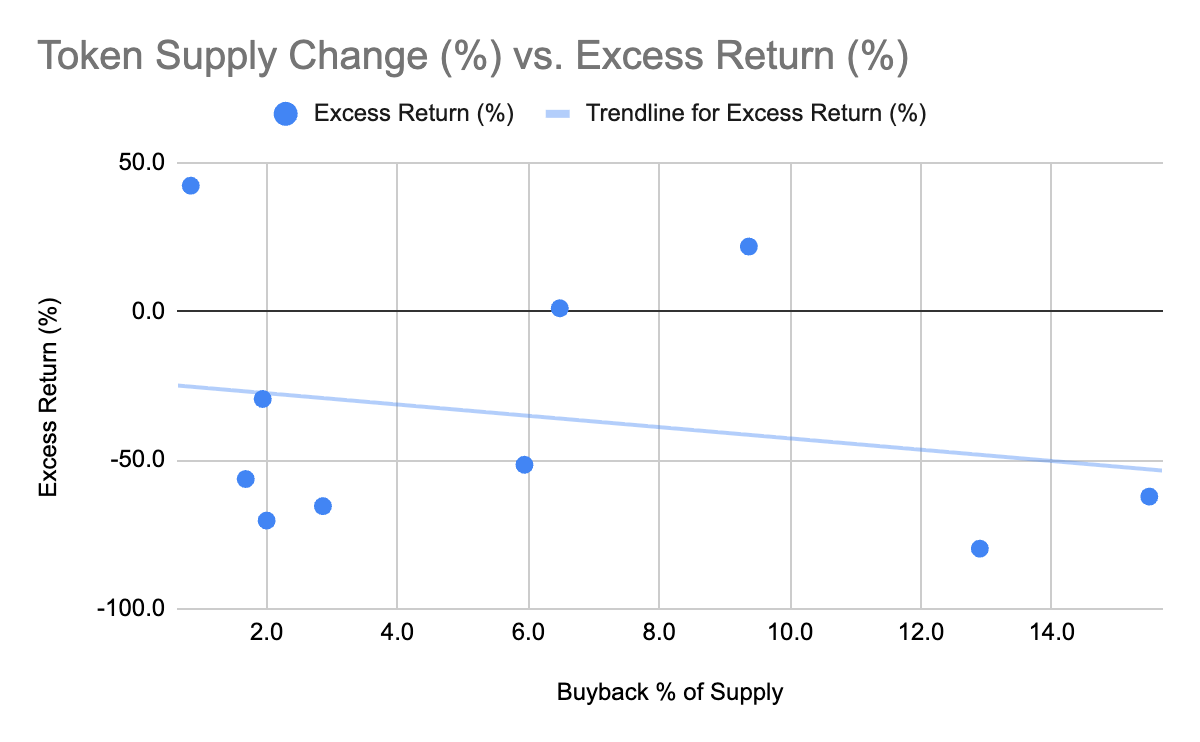
2) Net supply dynamics are more important than buyback.
Supply is affected not only by buybacks (repurchase/burn), but also by vesting, issuance, airdrop unlocks, incentive emissions, and any mechanism that increases circulating supply. Practically, what matters is the net effect: “buyback reduction” minus “new circulating supply added” over the same period.
3) Competition and business performance (revenue/TVL growth) can materially change the marginal impact of buybacks.
When core business growth is strong and supply is relatively clean, buybacks are more likely to be priced as long-term value return; when supply inflates rapidly or competition deteriorates, the buyback effect is often offset by supply or fundamentals.
4) Quick conclusion: Buyback + no additional supply + improving business & outlook → all three are necessary for excess return
From this 2025 YTD sample, the tokens with positive excess return (AAVE, HYPE) share a common pattern: (1) meaningful buybacks, (2) supply that is flat or declining (not inflating), and (3) business fundamentals that are stable-to-improving. When any one of these three conditions is missing, excess return becomes difficult to achieve—even if buybacks are large in absolute terms. SKY also has positive excess return, but its business fundamentals are not improving, resulting in only modest token performance.
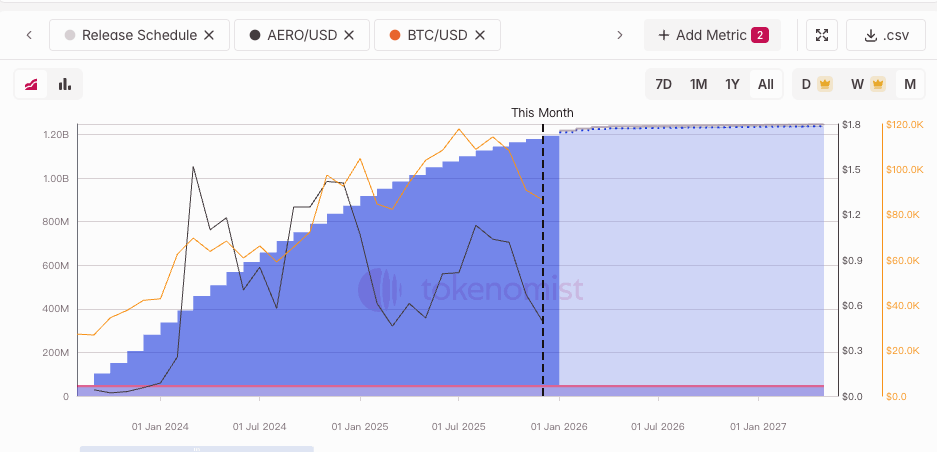
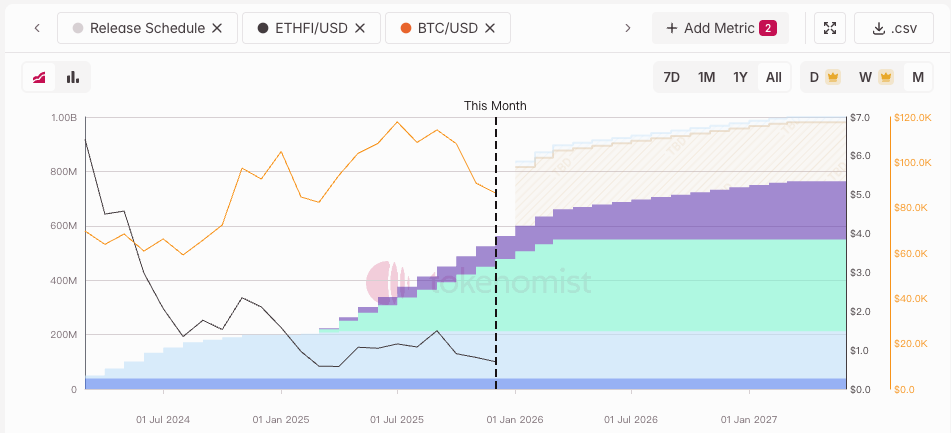
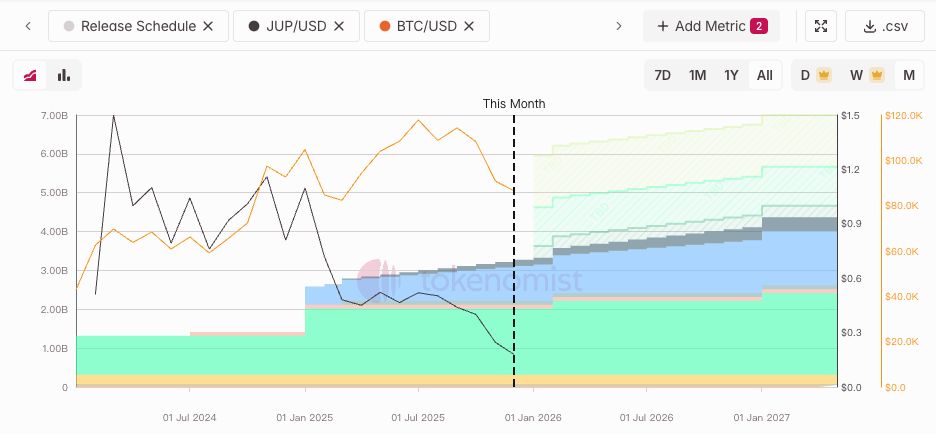
Missing buybacks or supply discipline: tokens like PUMP, AERO, ETHFI, and JUP all have buybacks, but supply still rises materially, overwhelming the buyback effect.
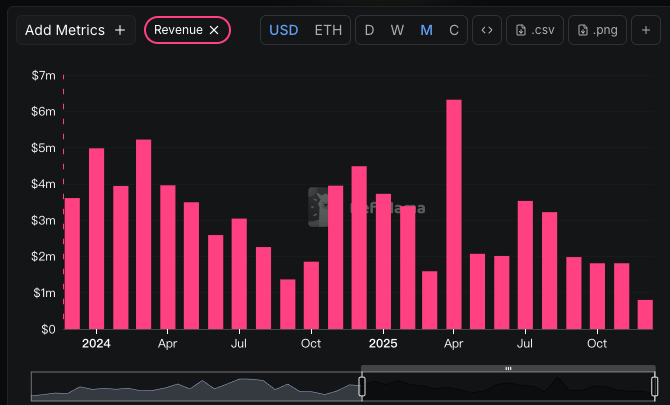
Missing business momentum: tokens like GMX and RAY have buybacks and even some supply reduction, but face deteriorating competitive position or revenue decline, making it hard for buybacks to drive sustained outperformance.
Thoughts
More broadly, 2025 may be remembered as the year crypto started learning capital allocation discipline.
Looking into 2026, the more interesting question is whether leading protocols can turn buybacks from a narrative into a predictable capital return policy—with clear rules, transparency, and credibility over time. Policy credibility comes from rules + repetition: either tie buybacks to FCF, or tie them to valuation—then execute through cycles.
Appendix: Token by Token Comment
AAVE
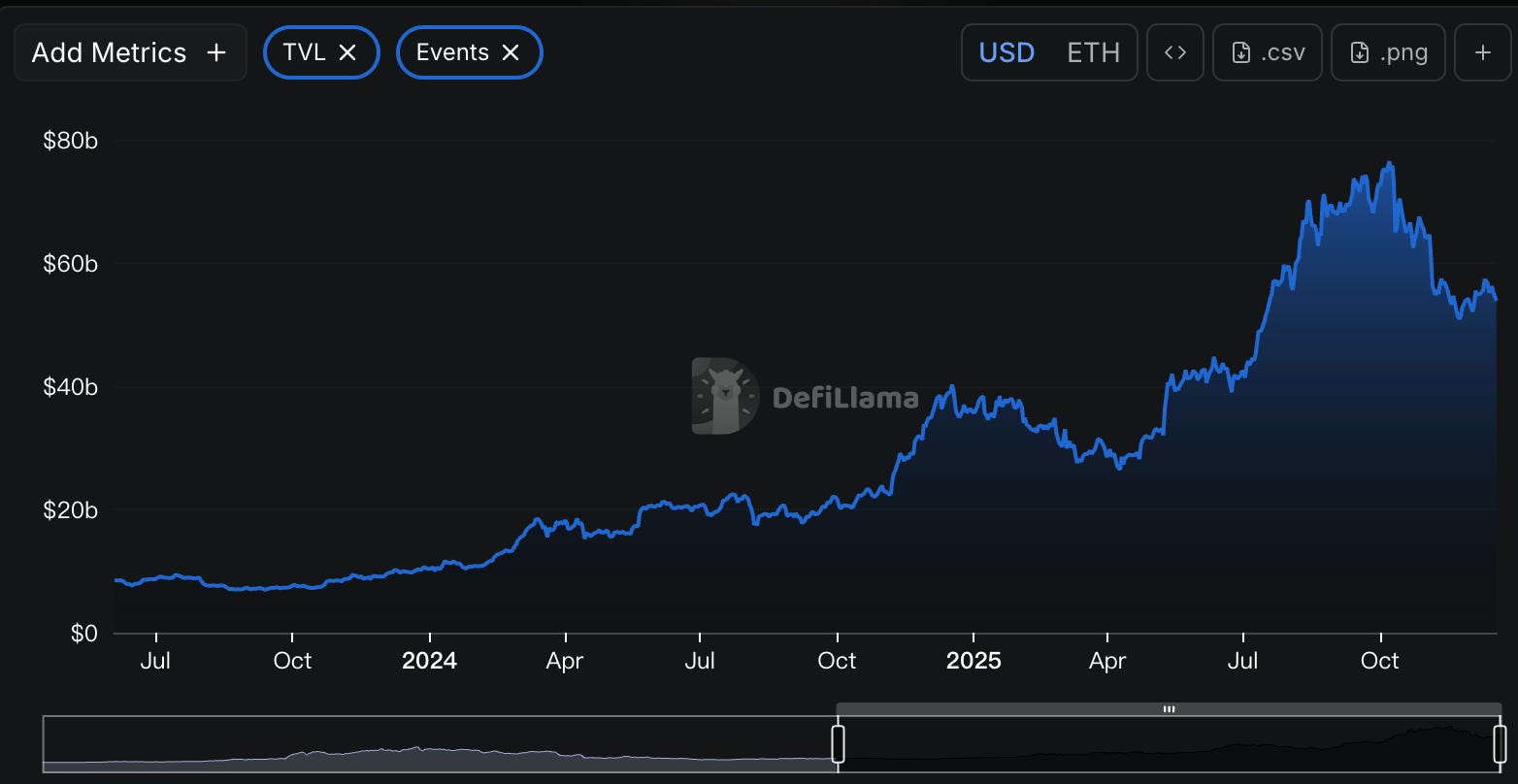
TVL has grown steadily since 2024, with no long-term selling pressure, making stock buybacks likely to result in significant excess returns.
HYPE
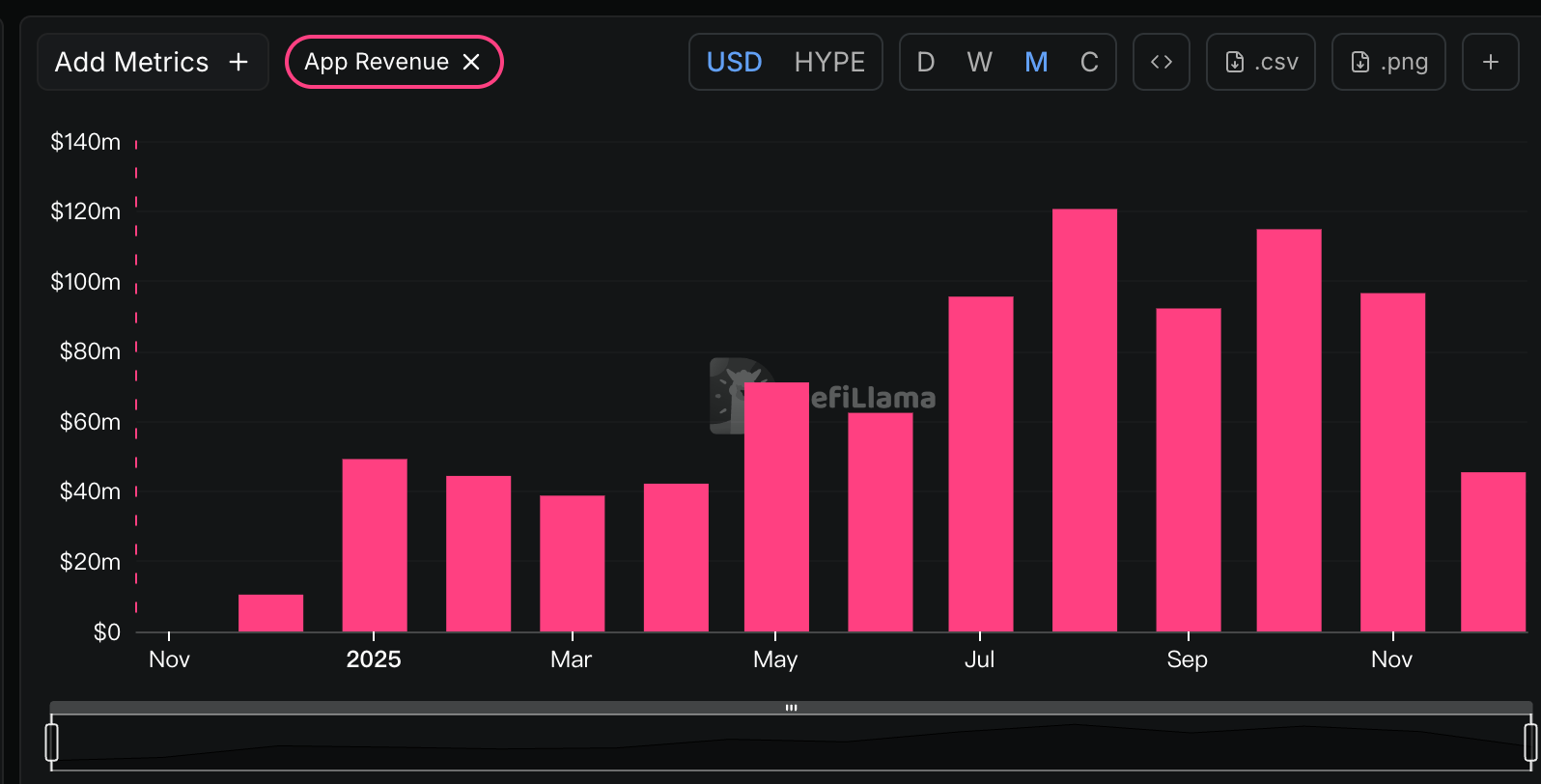
The strong growth resulted in a complete buyback, which absorbed the selling pressure from airdrop tokens, but later price performance was also affected by the emergence of many perp competitors.
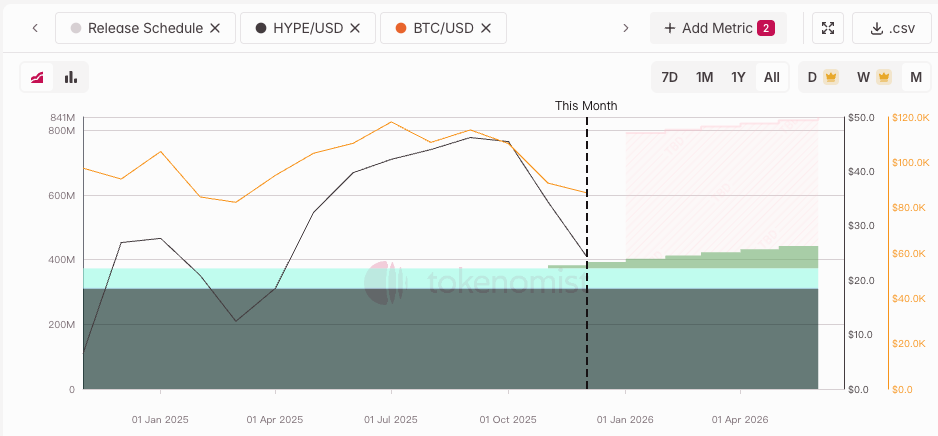
Token vesting: HYPE unlocked 31% of total token supply on day 1 since Nov 24, huge supply, but still outperformed BTC price due to its huge buyback amount.
SKY (Sky Protocol)
OG DeFi; no token issuance, but business growth is not significant. Future interest rate cut expectations are also suppressing the coin’s price performance.
PUMP
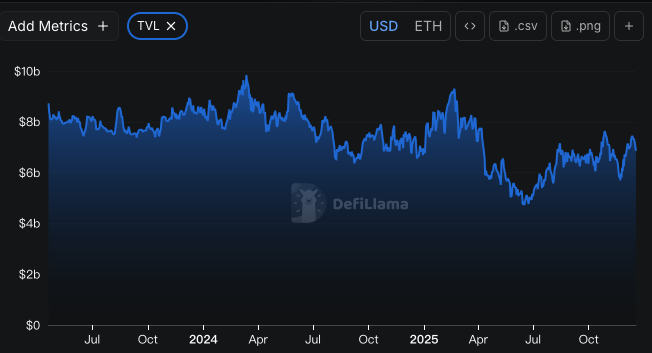
New lunch token + more supply + revenue has also dropped 60% from the high point in the fourth quarter of last year after meme coin hype diminished.
AERO
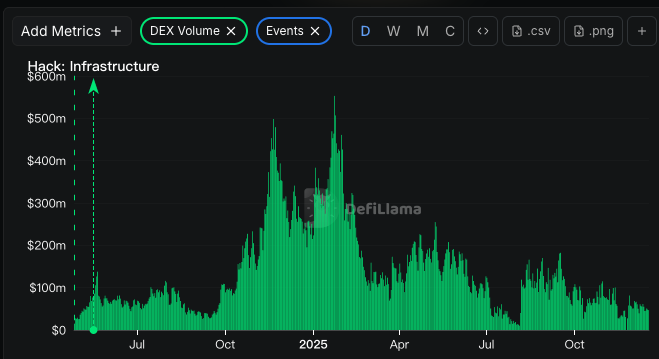
The supply is increasing because there is still a large amount of vesting for the old token.
ETHFI
Business growth is fast, but it is still facing rapid inflation, which continues to put pressure on the token price.
GMX
A long-established perp protocol that continues to buy back tokens (while also continuously issuing new ones), but faces competition from HYPE and other perp protocols, leading to poor token price performance
KAITO
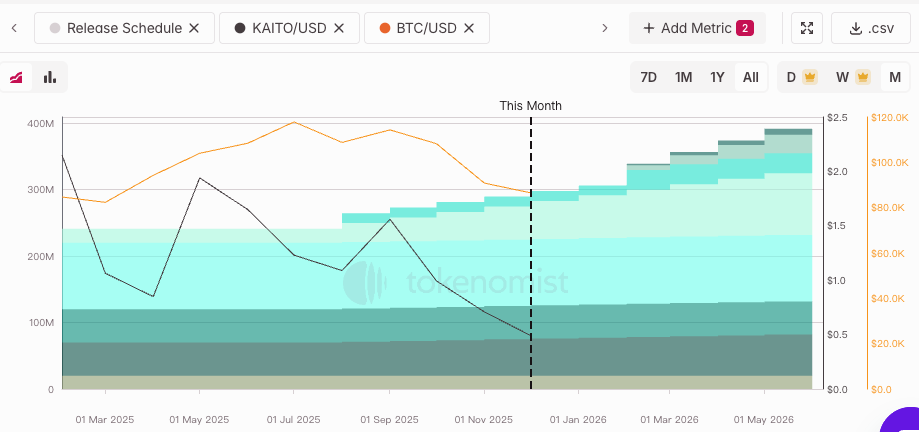
New launch token (supply is unchanged, but the airdrop resulted in strong selling pressure).
JUP (Jupiter)
Business performance is good, but continuous issuance means the token buyback cannot reduce the supply.
RAY (Raydium)
Up 250% by the end of 2024, resulting in a high base, No unlock actually make RAY have outperformed BTC during 2024 given Solana memecoin hype.
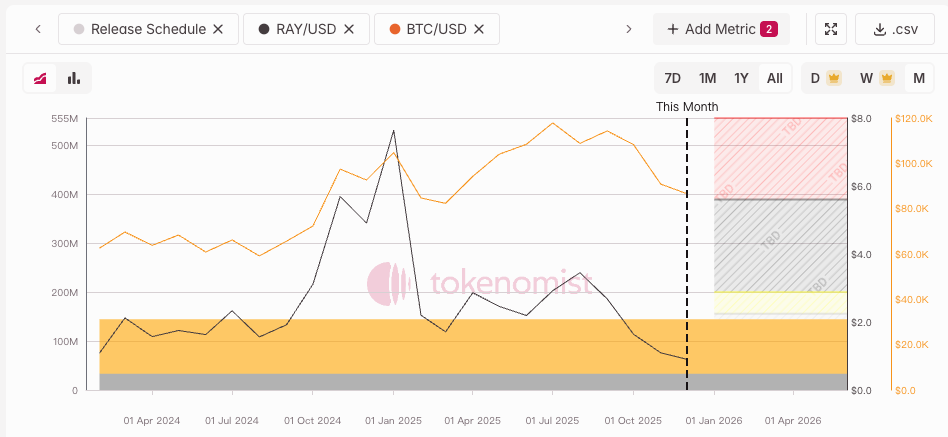
But revenue dropping 80% from the high point of Q4 last year.